


Plants
Process Gas Membrane
Systems
Completely packaged membrane units for purification and separation of process gases—tailored to your requirements, delivered as prefabricated skids, with high recovery and up to 99 vol-% product purity.
TAILORED GAS PURIFICATION SOLUTIONS
Compact membrane separation—customized for your process
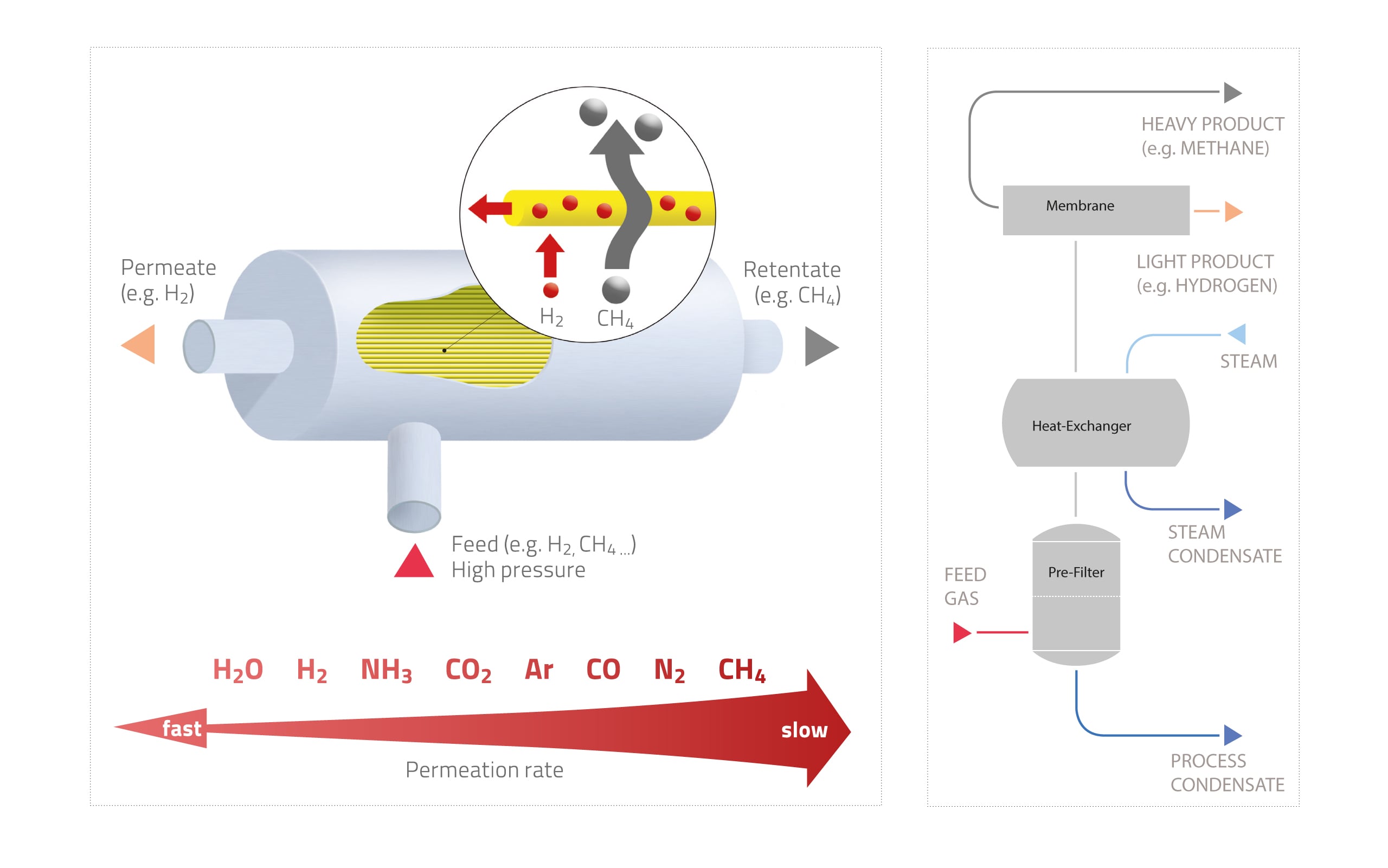
Mahler AGS process gas membrane systems separate and recover valuable components from crude feed or off-gas streams (often used as HRUs). Beyond hydrogen recovery, the units can adjust syngas ratios and recover/separate methane, helium, carbon dioxide, oxygen and nitrogen - fully automatic, with options for unattended operation and part-load control.
Plant data:
| Feedstock: | process gases / natural gas / fuel gas |
| Capacity: | 5.000 to 60.000 Nm³/h |
| Purity: | up to 99 vol.-% |
| Pressure: | 4 – 7 bar(abs) |
| Product recovery: | up to ~98–99% (application dependent) |
Benefits
Why Process Gas Membranes?
Completely pre-manufactured skids
Unattended and automated operation
Continuous process without any moving parts
Online adjustment of recovery and product purity possible
High availability and reliability
Frequently asked questions
Questions about our process gas membranes
How are membrane systems delivered and operated?
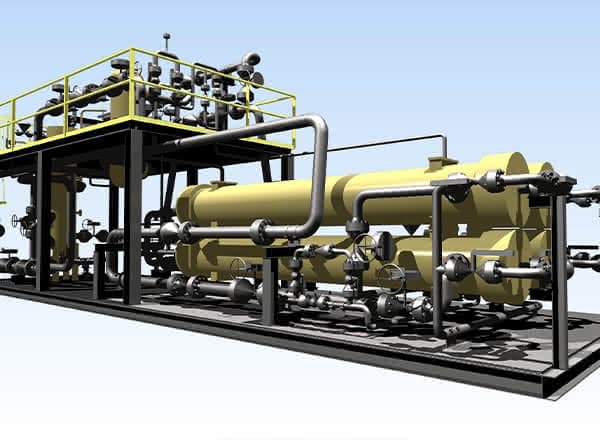
Our membrane systems are typically delivered as modular, pre-assembled units that are ready for installation on site. Operation is straightforward: after connection to the process feed, the system is commissioned, and standardised controls allow automated, trouble-free continuous running. Maintenance is minimal thanks to robust design and reliable membrane modules, ensuring consistent performance over time.
Can membrane systems be combined with other technologies?
Mahler AGS membrane technologies are suitable for a broad spectrum of applications requiring efficient gas separation. Typical feed gas compositions include mixtures of water vapor, helium, hydrogen, carbon dioxide, oxygen, carbon monoxide, nitrogen, and methane. Depending on the specific application, process pressures of up to 160 barg can be accommodated. Given the wide variability in applications and the critical influence of operating conditions, we strongly recommend submitting an inquiry with detailed feed and product specifications. Our team of experts will then assess the feasibility and tailor a solution optimized for your specific requirements.
How do process membranes work?
Membrane systems for gas mixtures work by exploiting differences in the permeability of individual gas components through a selective membrane material. When a gas mixture is fed under pressure to one side of the membrane, certain gases permeate faster due to their smaller molecular size, higher diffusivity, or greater solubility within the membrane material. This creates a separation effect where the permeate side is enriched with specific gases, while others are retained on the feed side. The driving force for this separation is the pressure difference across the membrane, and the effectiveness depends on the membrane’s selectivity and permeability characteristics.
Is PSA technology or a membrane solution better for hydrogen containing gases?
Both PSA and membrane solutions have their advantages for treating hydrogen-containing gases. PSA typically achieves higher hydrogen purity (up to 99.9999 vol.%) with good recovery rates. In addition, investment costs scale significantly less as product capacity increases. Membrane systems offer simpler operation, lower capital and operating costs, and can achieve hydrogen purities up to 99% with flexible recovery rates depending on the feed gas and operating conditions. The choice between PSA and membrane technology depends on specific purity requirements, feed gas composition, pressure conditions, and economic considerations. In some cases, hybrid systems combining both technologies provide optimal performance by balancing purity and recovery.
Which process gases can be treated using Mahler AGS membrane technologies?
Mahler AGS membrane technologies are suitable for a broad spectrum of applications requiring efficient gas separation. Typical feed gas compositions include mixtures of water vapor, helium, hydrogen, carbon dioxide, oxygen, carbon monoxide, nitrogen, and methane. Depending on the specific application, process pressures of up to 160 barg can be accommodated. Given the wide variability in applications and the critical influence of operating conditions, we strongly recommend submitting an inquiry with detailed feed and product specifications. Our team of experts will then assess the feasibility and tailor a solution optimized for your specific requirements.
Applications for our process gas membranes
Typical applications for our process gas membranes
Petrochemical and refining industry
Metallurgical and steel industry
Glass and enamel industry
Chemical and pharmaceutical industry
Food industry
Electronics industry
Technical gases
Design your Process Gas Membrane unit with MAHLER
Get expert guidance to configure membrane systems for maximum gas recovery, purity and efficiency.
Information brochure
Our Process
End-to-end expertise for your gas system
With MAHLER, you don’t just get a gas plant – you get a full-service partnership. Our end-to-end approach includes professional project management, tailored engineering, high-quality in-house manufacturing, and long-term support. Each project follows a structured process – designed to deliver maximum reliability, efficiency, and value.
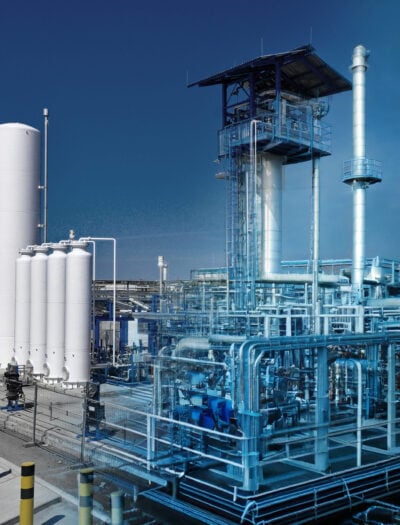
01
Planning & Engineering
We analyze your requirements and design the ideal system – tailored, efficient, and ready to scale.
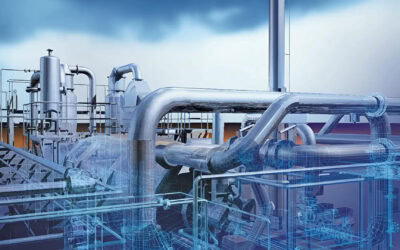
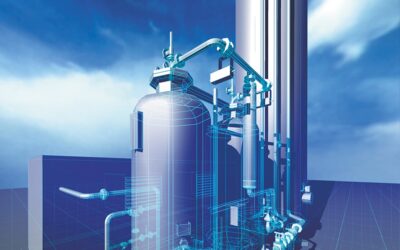
02
Technology & Plants
We develop and produce your plant using advanced MAHLER gas technologies and in-house manufacturing expertise.
03
Delivery & Commissioning
From procurement to on-site installation – everything is coordinated and delivered from a single source.
04
Service & Optimization
We support you with maintenance, spare parts, and continuous optimization to keep your process efficient long-term.
Contact
Start planning your process gas membrane system with our engineering experts today
Our experts are available to provide you with personalized advice. Contact us to find the best solution for your system!